
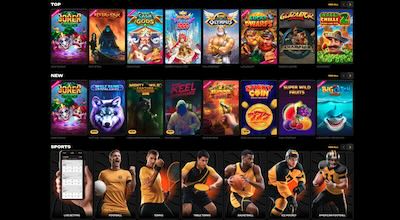
Large online casino lobbies can make choosing a game feel harder than playing one. A useful starting point is the spinsy online casino catalogue, where players can browse by game type, popularity, provider and other categories. The practical goal is not to chase the biggest-looking title, but to narrow the selection according to the experience you want: quick rounds, traditional table play, live interaction, jackpots or something unfamiliar. A structured search can save time and make it easier to understand what you are selecting.
Begin with the kind of play you actually want
Game type is usually the most useful first filter. Slots suit players who prefer automated rounds, varied themes and simple controls. Instant games generally offer short sessions with a compact interface, while table games provide more recognisable formats such as roulette, blackjack and baccarat. These categories feel different even before rules, stakes or visual design enter the decision.
Live casino games add a streamed dealer and a more social table format. Roulette, blackjack and baccarat are common starting points, but the live section may also include poker, dice, game shows and international tables. Game-show formats can be more theatrical than conventional table games, with hosts, bonus rounds and changing visual presentations. They are still gambling products, however, rather than a form of guaranteed entertainment or income.
Jackpot games deserve separate consideration because their appeal is often connected to a larger advertised prize rather than a familiar game mechanic. A jackpot label does not explain the rules, qualifying bets or probability of winning. Before selecting one, open the information panel and check how the prize works. If you want a calmer comparison, begin with standard slots or table games, then explore jackpot titles only after understanding their specific conditions.
Use categories to reduce a crowded lobby
A lobby containing several thousand titles is easier to manage when you treat categories as a decision tool rather than browsing every row. Sections such as Top, New, Popular, Exclusive, Live Games, Instant Games, Slots, Table Games and jackpots can quickly separate familiar choices from recent additions. Start with one category that matches your intended session, then apply a second filter instead of scrolling indefinitely.
Search is especially useful when you already know a title, theme or format you want to investigate. Provider filters can also help when you recognize a studio whose interface or game style you prefer. The catalogue lists suppliers including Hacksaw Gaming, Amusnet, BGaming, Booongo, Spinomenal, Yggdrasil, Evoplay, Playson, OneTouch and several live-game studios. A provider name can narrow discovery, but it should not be treated as proof that every title has identical rules or performance.
Many titles support demo play, which can be useful for learning buttons, paylines, bonus features and round speed without immediately committing funds. A short demonstration cannot establish a game’s long-term return, volatility or likelihood of a result. Use it as an orientation tool: decide whether the controls are clear, whether the pace feels comfortable and whether the rules make sense. If the information panel is vague, move to another title rather than relying on assumptions.
Choose between familiar mechanics and new formats
Traditional games provide a straightforward route into the catalogue. Roulette is built around selecting outcomes on a wheel, blackjack centres on comparing hands against the dealer, and baccarat uses a fixed dealing structure with limited decisions. These games may be easier to recognize, but familiarity should not be confused with predictability. Each round remains uncertain, and the rules, available bets and table limits still need to be read.
Slots and instant games offer more variety in presentation. A slot may use expanding symbols, bonus rounds, multipliers, cascading wins or progressive features, while an instant game may focus on a single repeated choice. Read the paytable before playing, especially where symbols, special features or qualifying combinations are not obvious. Look for explanations of paylines, bet settings, bonus triggers and any maximum-win wording.
New formats can be worth exploring when you want variety, but compare one unfamiliar element at a time. For example, move from a conventional slot to a different theme before trying a game with unusual bonus mechanics and a faster pace simultaneously. This makes it easier to identify what you enjoy and what you do not. A useful personal shortlist might contain one familiar title, one new title and one table or live option for comparison.
Read the details before selecting a title
Visual design is a poor substitute for game information. Before deciding, look for the rules, paytable, betting range, available features and any stated return-to-player or volatility information. These details describe the mathematical and practical character of a title more accurately than its theme. If the page does not make important information easy to find, treat that lack of clarity as a reason to pause.
Volatility is commonly used to describe how frequently a game may pay and how widely results can vary, but it is not a forecast for an individual session. A lower-volatility game is not a guarantee of profit, and a higher-volatility game is not automatically better because it advertises larger possible wins. Similarly, an RTP figure is a long-run theoretical measure, not a promise that a player will receive a particular percentage during a short visit.
Set the boundaries of the session before opening a game. Decide how much money and time you are prepared to spend, and avoid increasing either simply because a bonus feature has not appeared. The Responsible Gambling Council’s public information can provide broader guidance about keeping gambling within personal limits. These principles apply equally to slots, live tables, jackpots and quick-play formats, even when the presentation makes one option feel more casual.
Build a practical shortlist for different sessions
A shortlist is more useful than a single permanent favourite because your preferred format may depend on available time and attention. For a brief session, an instant game or a simple slot may be easier to understand. For a more deliberate session, a table game with clearly explained rules may be preferable. Live games can suit players who value dealer interaction, while jackpot titles may appeal to those specifically interested in prize mechanics.
Keep the shortlist small enough to compare properly. Three to five titles is usually sufficient for a first pass. Record the game type, provider, key rules, volatility information if supplied, minimum and maximum bet settings, and whether demo play is available. This does not predict outcomes; it simply prevents a colourful lobby from making every new title seem equally suitable.
Review the shortlist after trying the demonstrations or reading the rules, not after chasing a result. Remove games with confusing instructions, uncomfortable pacing or features you do not understand. Keep the title that offers the clearest experience within your chosen boundaries, rather than the one with the most dramatic artwork or the largest advertised prize. The strongest discovery process is selective, informed and repeatable.
Questions about choosing casino games
What is the fastest way to find a suitable game?
Start with the broad format you want, such as slots, instant games, table games or live casino. Then use one category or provider filter and read the rules for a few titles. This approach is faster than browsing the entire lobby and helps you compare games with similar mechanics.
Does demo play show whether a game is worth playing?
Demo play can show how the controls, paytable, bonus features and pace work. It cannot prove that a game will produce a particular result, reveal short-term profitability or verify its long-run mathematical characteristics. Use it to assess clarity and suitability, then review the published information before deciding.
Are jackpot games better than regular slots?
Not necessarily. Jackpot games are structured around a prize feature that may have particular qualifying rules, while regular slots can offer simpler mechanics or different volatility. Compare the paytable, betting settings and jackpot conditions rather than judging by the advertised prize. Neither format guarantees a win or a particular outcome.